The 2026 Andorra Epic marked another milestone in our season as we lined up for one of the most prestigious events on the international marathon mountain bike (XCM) calendar. As part of the Epic Series, the global benchmark for multi-day mountain bike stage races, the event brings together the world’s best XCM specialists each year on demanding, technical, and spectacular courses.
Over four days, with La Massana serving as the event’s base camp, two-rider teams tackled a course totaling nearly 200 kilometres and 6,400 metres of elevation gain through the heart of the Andorran mountains. It is an adventure where physical performance, technical skills, race management, and teamwork are inseparable.
The 2026 edition featured an exceptionally strong field, with many of the world’s top XCM riders on the start line, turning every stage into a true battle against the international elite.
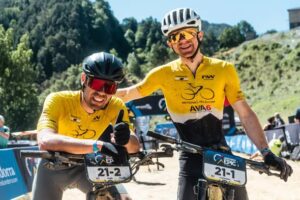
Our team, made up of Alexandre LANGLAIS and Ewen Astegiano, had the privilege of competing under the colours of Squirt Cycling Products. We would like to express our sincere gratitude to the brand for its trust and support. Thanks to a full invitation that included race entries and half-board accommodation, Squirt Cycling Products enabled us to approach the event in the best possible conditions and focus entirely on achieving our performance goals.
In this race report, we look back at each of the four stages, highlighting the key moments of the race, the challenges we faced, and the lessons we learned from this unique experience at one of the world’s most demanding and iconic marathon mountain bike events.
Road Book: Four Stages | Thursday, 2 July – Sunday, 5 July 2026
- Stage 1: 49 km | Elevation Gain: 1,440 m | Elevation Loss: 2,100 m
- Stage 2: 61 km | Elevation Gain: 2,200 m | Elevation Loss: 2,300 m
- Stage 3: 52 km | Elevation Gain: 1,300 m | Elevation Loss: 1,620 m
- Stage 4: 45 km | Elevation Gain: 1,650 m | Elevation Loss: 1,650 m


Stage 1 – A Controlled Start at High Altitude
49 km | 1,440 m D+ | 2,100 m D− | 2h 20min | 246 W Normalized Power | Average Speed: 20.5 km/h | 16th Place
The tone was set from the very start of Stage 1. At nearly 2,000 metres above sea level, in the heart of the Pal Arinsal resort, the peloton rolled away. The opening kilometres were explosive, taking in part of the famous UCI Cross-country World Cup course before heading towards the day’s first major challenge: the Port de Cabús, a long paved climb topping out at 2,327 metres.
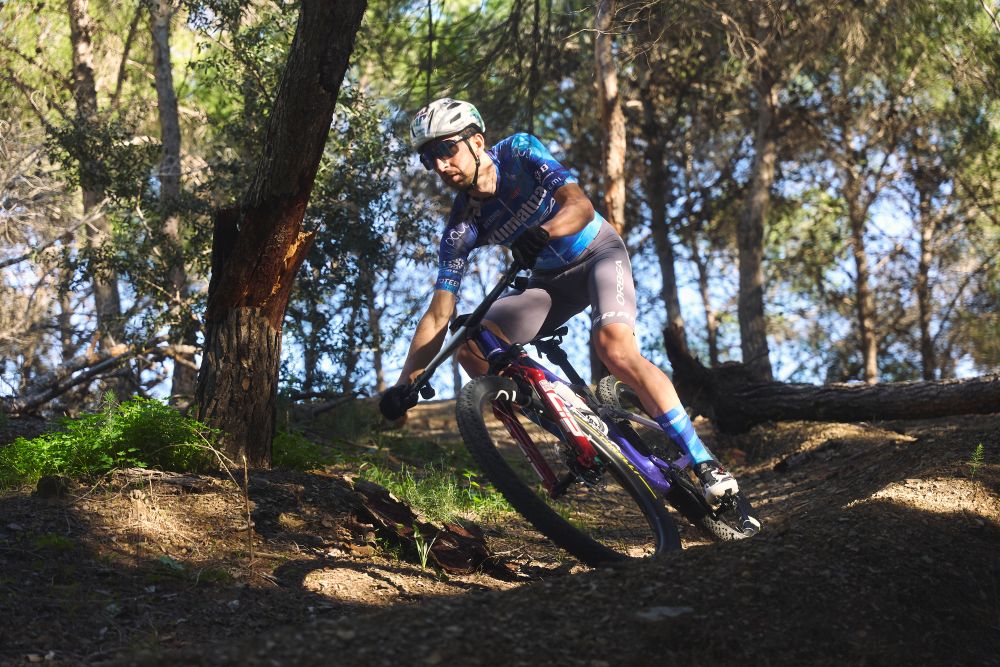
Knowing the week ahead would be long and demanding and that the altitude could quickly take its toll, our strategy was straightforward: stay composed and avoid going into the red too early. After the frantic start, we quickly settled into our own rhythm on the climb. Riding alongside two other teams, we formed a strong group battling for a place inside the top fifteen.
As the kilometres passed, the effects of the altitude began to show. Ewen started to feel its impact, while Alexandre experienced the first signs of tendon pain in his knee. Without panicking, we adjusted our pace accordingly and managed to keep the gaps to the teams ahead under control.
The final metres of the Port de Cabús climbed a particularly steep hiking trail. Reaching the summit rewarded us with spectacular views over the Andorran mountains before dropping into a stunning mountain singletrack descent — fast, technical, and incredibly enjoyable. Feeling more comfortable on the descent, we caught back up with one of the teams that had gained a small advantage on the climb.
The second climb of the day followed shortly afterwards: around six kilometres towards Coll de la Botella, where the first feed zone was located. But reaching the top did not signal the end of the difficulties, as a demanding rollercoaster section of technical singletrack extended the effort. Back in 15th position at the summit, we began to feel the accumulated fatigue on this punishing section. With half of the stage still to race, it made far more sense to manage our effort than to risk blowing up.
The long technical descent that followed provided another opportunity to close the gap to our direct rivals. The time differences remained small, with every team responding to the others’ attacks. The final fifteen kilometres, featuring rolling terrain, were ridden largely alone. We maintained a strong, consistent pace all the way to the finish, securing 16th place — an encouraging result considering the exceptional depth of the field.
Back at the finish, another highlight of the day came thanks to the support of Squirt Cycling Products. We simply dropped our bikes at the brand’s dedicated bike wash station, where the team took care of cleaning and preparing them for the next stage. It was a valuable service that allowed us to focus entirely on recovery before joining the riders’ dinner at the event’s base camp.
Overall, Stage 1 unfolded exactly as we had hoped: a smart and controlled race, with no unnecessary risks, no mechanical issues, and a well-managed approach to racing at altitude. The foundations were laid for the rest of the Andorra Epic. After a well-earned nap and some recovery with our legs in the hotel’s swimming pool, our focus was already shifting towards Stage 2.


Stage 2 – Mastering the Queen Stage
61 km | 2,200 m D+ | 2,300 m D− | 3h 21min | 236 W Normalized Power | Average Speed: 18.7 km/h | 13th Place
Stage 2 was the queen stage of the 2026 Andorra Epic. The day’s route covered 61 kilometres and 2,200 metres of elevation gain between Canillo and La Massana, featuring two long climbs reaching over 2,300 metres above sea level.
The day started early. After a substantial breakfast at 6:30 a.m., we boarded the shuttle buses provided by the organisers to reach Canillo, around twenty minutes from the race base. At 9:00 a.m., the stage got underway.
The opening seven kilometres allowed the peloton to remain relatively compact as we climbed steadily on the road. But as we entered El Tarter, the real challenge began. The gradients suddenly steepened, leading into a demanding ten-kilometre climb with constantly changing gradients and several pitches exceeding 20%.
Sticking to our race plan, we quickly settled into a strong yet sustainable pace, never pushing beyond our limits. The climb was smooth and consistent from start to finish. At the summit, more than 2,300 metres above sea level, we were sitting inside the top fifteen once again — further proof that our pacing strategy was paying off.
The descent that followed was anything but straightforward. A succession of technical singletracks interspersed with brutally steep punchy climbs gradually brought us back down towards Canillo, where the main feed zone awaited at the base of the day’s second major ascent.
This second climb stretched over 12 kilometres, beginning on tarmac before transitioning onto much rougher and more irregular trails. Our legs were still responding well, allowing us to produce another consistent climbing performance. By the summit, we had moved into 14th place, less than a minute behind the team occupying 13th.
Only around ten kilometres of technical descending remained before reaching La Massana. This terrain suited us well, and we steadily closed the gap to our direct rivals. The final kilometres developed into a tactical battle, from which we emerged victorious to secure an excellent 13th place on the queen stage.
After 3 hours and 20 minutes of racing, we were extremely satisfied with the day’s performance. We had executed our race plan perfectly, maintaining a consistent effort throughout despite the demanding course. Following the recovery meal, the afternoon was devoted to rest as well as meticulous bike preparation. Checking bolt torque, adjusting tyre pressures, and servicing the drivetrain had become part of our daily routine.
As throughout the event, we relied on Squirt Chain Lube from Squirt Cycling Products to lubricate our chains. Despite the ever-present dust on the Andorran trails, our drivetrains remained clean, quiet, and performed flawlessly — an undeniable advantage in a demanding multi-day stage race.
Late in the afternoon, we dropped our bikes off at the organisation’s logistics area, where they were transported to the start of Stage 3 at Naturlandia, around 45 minutes away by road. We also prepared our bottles and personal nutrition, which the organisers placed directly on our designated tables at the following day’s feed zones.
A short recovery session in the hotel’s swimming pool, followed by dinner, brought this demanding day to a close. Finishing 13th on the toughest stage of the week gave us a real boost of confidence as we looked ahead to the final two days of racing.


Stage 3 – Managing the Effort Before the Grand Finale
52 km | 1,300 m D+ | 1,620 m D− | 2h 27min | 248 W Normalized Power | Average Speed: 18.7 km/h | 16th Place
Stage 3, linking Naturlandia to La Massana, featured a more downhill-oriented profile than the previous days, with 1,620 metres of elevation loss and 1,300 metres of climbing over a 52-kilometre course. Although the route looked less demanding on paper, the Andorra Epic once again proved that there is no such thing as an easy stage.
The alarm went off at 6:00 a.m. to allow enough time for breakfast before boarding the shuttle to Naturlandia, around 40 minutes from the race base. Arriving at the venue an hour before the start, we collected our bikes, which had been carefully transported by the organisers. After one final tyre pressure check and a few routine inspections, we were ready to line up.
At exactly 9:00 a.m., the stage got underway. The day’s opening challenge was immediate: a long 15-kilometre climb to the Naturland plateau, rising to more than 2,200 metres above sea level.
The pace was fast from the gun, and the peloton stayed together during the opening minutes. But, as on the previous stages, the selection quickly began. After around ten minutes of climbing, we deliberately settled back into our own rhythm to avoid going into the red. We continued the ascent alongside two other teams. In the final kilometres of the climb, Ewen was missing just enough to follow their acceleration. Staying true to the strategy that had worked so well all week, we chose to manage our effort rather than risk compromising the rest of the stage.
We reached the summit in 17th position, but the descent was far from straightforward. The opening kilometres combined technical singletrack, committed descents, and short but brutally steep climbs. On this demanding terrain, we gradually reeled in a team that was less comfortable on the technical sections before dropping into a long, flowing descent all the way to the valley floor.
From there, the character of the stage changed completely. The final kilometres gradually climbed back towards La Massana, alternating long stretches of road with faster gravel tracks before finishing on a spectacular balcony singletrack overlooking the valley. This entire second half of the stage was raced on our own. Maintaining a steady pace all the way to the finish, we crossed the line in 16th place — a result that, more importantly, allowed us to consolidate our position inside the overall top fifteen heading into the final stage.
Once across the finish line, it was time to focus on recovery. After lunch, our bikes once again went through the expert hands of the Squirt Cycling Products team for a full wash before we carried out our final checks and lubricated the drivetrains with Squirt Chain Lube. Despite three days of riding on dusty Andorran trails, the wax kept the transmission clean, quiet, and running flawlessly.
The afternoon was dedicated to rest, including a well-earned nap while watching the opening stage of the Tour de France, before returning to the race venue later in the day to drop off our final nutrition supplies for the last stage. One final recovery session in the hotel’s swimming pool rounded off another successful day.
Tomorrow would already be the final stage. After three demanding days of racing, the situation was very encouraging: we had avoided mechanical issues, managed the altitude well, and headed into the last day with a place inside the overall top fifteen to defend.


Stage 4 – One Final Battle to Cap Off a Great Week
45 km | 1,650 m D+ | 1,650 m D− | 2h 23min | 242 W Normalized Power | Average Speed: 19.3 km/h | 16th Place
The final morning of the 2026 Andorra Epic had arrived. Stage 4 featured a 45 kilometre loop starting and finishing in La Massana, with 1,650 metres of elevation gain. It was one last demanding challenge, set to test every rider after three already gruelling days of racing.
The stage began immediately with a long 19 kilometre climb towards the upper slopes of the Pal Arinsal resort. The opening four kilometres were raced in a compact peloton as the pace gradually increased and the group began to split apart. By now, the accumulated fatigue was becoming impossible to ignore. Our objective was clear: defend our position in the overall standings. Once again, we chose to ride at our own pace, climbing steadily and under control rather than responding to every acceleration.
At the summit of the first climb, we remained within reach of the teams fighting for the overall top fifteen. A fast, mostly flowing descent on wide gravel tracks quickly brought us to the foot of the day’s second challenge: Coll de la Botella, a climb we had already tackled during Stage 1.
This time, the climb felt familiar. Drawing on what we had learned earlier in the week, we managed our effort perfectly and stayed in contention for the top fifteen. Unfortunately, in the final few hundred metres of the ascent, Ewen began to feel the cumulative effects of four days of racing, and we lost contact with the teams directly ahead of us.
Nothing was decided yet. The final ten kilometres were entirely downhill and highly technical terrain where we hoped to recover some of the lost ground. Despite a strong descent, the fatigue accumulated over four demanding stages ultimately took its toll, and we were unable to close the gap to our closest rivals.
We crossed the finish line in 16th place on the final stage. More importantly, the result secured us an overall finish inside the top fifteen, bringing an excellent conclusion to four exceptionally demanding days of racing.
Looking back, this week was a tremendous success. We managed our race intelligently, avoided any mechanical issues, and maintained a consistently high level of performance despite the challenges we faced. Between the effects of altitude on Ewen and Alexandre’s knee tendon pain, we continually adapted our strategy without ever losing sight of our objective.
The 2026 Andorra Epic, featuring many of the world’s leading XCM specialists, will remain a truly memorable experience. We leave Andorra proud of what we achieved and satisfied with a result that reflects the work we put in throughout the week.
Finally, we would like to extend our sincere thanks to Squirt Cycling Products for their trust and outstanding support throughout this adventure. Thanks to their invitation, logistical assistance, and on-site services, we were able to compete in the best possible conditions and focus entirely on our performance. It was an exceptional week that has already inspired us to line up for another stage race under the colours of the South African brand.
Our Partners
Thank You All
Squirt Cycling Products, Materiel-Velo.com, AVA6, Scott, Tous Chalets, Emile Maurin, Pommiers VTT